Estate Planning After a Second Marriage in New York
Second marriages are complicated. Not in the emotional sense — in the legal sense. You've got assets from a prior life, children who have their own inheritance expectations, and a new spouse who has legitimate rights too. Getting the estate plan right means protecting everyone. Getting it wrong means your family spends years in litigation — or someone you love gets nothing.
Why Your Old Estate Plan Won't Work Anymore
Most people who remarry have an existing will. Maybe it leaves everything to their first spouse, then to their children. Maybe it was drafted 15 years ago by a lawyer who's since retired. Whatever it says, remarriage in New York changes your legal landscape dramatically — and most of those changes work against you if you don't act.
Under New York EPTL § 5-1.4, marriage after execution of a will doesn't automatically revoke it. But your new spouse has an independent right — the elective share — that can override your will entirely. Divorce does revoke testamentary gifts to a former spouse under EPTL § 5-1.4, but only after the divorce is final. If you die during a separation, a divorcing spouse may still have rights to your estate you never intended to give them.
The bottom line: the day you remarry, your estate plan needs a complete overhaul. Not an update — a rebuild.
The Elective Share Problem
New York's elective share is one of the most misunderstood provisions in estate law. Under EPTL § 5-1.1-A, a surviving spouse has the right to take against the will — claiming a statutory minimum share of the estate even if the will leaves them nothing, or less than the statutory amount. That share is the greater of $50,000 or one-third of the net estate.
Let me put that in real terms. Say you remarry at 62 after a divorce and have three adult children from your first marriage. Your estate is worth $1.2 million. You write a will leaving everything to your children. Your new spouse is supportive and agrees with this plan. You die ten years later.
Your new spouse can still elect against the will and take one-third of the net estate — roughly $400,000. Your children expected $400,000 each. Now they split $800,000. If the marriage went south in year nine, your spouse could take $400,000 that your children spent a decade expecting to inherit.
The elective share can't be eliminated unilaterally. It can only be waived by the spouse, either in a prenuptial agreement before the marriage or a postnuptial agreement after. If there's no written waiver, you have to plan around it — not against it.
New York Elective Share in Plain English: No matter what your will says, a surviving spouse in New York has a legal right to receive the greater of $50,000 or one-third of your net estate. This right can be waived by written agreement before or after marriage — but only by the spouse voluntarily, with independent legal counsel. You cannot take it away through your will alone.
Prenuptial Agreements: The Most Underused Tool
I tell every client who's about to remarry the same thing: a prenuptial agreement is not a statement of distrust. It's an act of respect for everyone involved — your children, your new spouse, and your own planning intentions. A prenup done right protects all of them.
A valid prenuptial agreement in New York can:
- Waive one or both spouses' elective share rights
- Define what property is separate versus marital for inheritance purposes
- Establish specific amounts or assets each spouse will receive on death
- Protect assets for children from a prior marriage
- Specify that appreciation on pre-marital assets remains separate property
For a prenup to be enforceable in New York under Domestic Relations Law § 236(B)(3), it must be in writing, signed by both parties, and acknowledged before a notary. Both parties should have independent legal counsel — a prenup signed by one party without their own attorney is substantially more vulnerable to challenge. And the timing matters: an agreement signed under duress — a week before the wedding, with threats of cancellation — can be voided by a court.
I've seen prenups protect $800,000 in inheritance for children from a first marriage that would otherwise have gone to a second spouse. I've also seen verbal "understandings" collapse completely in probate court when one spouse died and the other exercised their elective share right. The difference between those two outcomes is a signed piece of paper.
If you're already married without a prenup, a postnuptial agreement can accomplish many of the same goals. It's somewhat harder to enforce — courts scrutinize postnups more carefully than prenups — but it's far better than nothing. Our estate planning team works alongside matrimonial attorneys to coordinate these agreements with your broader plan.
QTIP Trusts: The Core Planning Tool for Blended Families
The Qualified Terminable Interest Property (QTIP) trust is the primary vehicle most estate attorneys use to balance the competing interests in a second-marriage estate plan. I've used it hundreds of times. Here's how it works — and why it's so effective.
A QTIP trust is an irrevocable trust that takes effect at your death. You fund it with some or all of your estate. Your surviving spouse receives all income generated by the trust assets for the rest of their life — guaranteed. They cannot be cut off. But they don't control the principal, and they can't change who ultimately receives it when they die. You decide who gets the remainder: your children, a charity, whoever you designate.
For federal and New York estate tax purposes, assets in a QTIP trust qualify for the unlimited marital deduction — meaning no estate tax on your death for assets that go into the trust (as long as you make the QTIP election on the estate tax return). Tax is deferred until the surviving spouse dies, at which point the trust assets are taxed as part of their estate.
The QTIP trust solves the core problem of second-marriage planning: how to provide for your spouse without disinheriting your children. Your spouse is supported for life. Your children receive the remainder after the spouse dies. Neither group is left out.
The Hernandez Family in Park Slope: A QTIP in Action
Roberto Hernandez, 61, remarried after his wife of 28 years died. His new wife, Diana, was 55. Roberto had two adult sons from his first marriage. His estate included a co-op in Park Slope worth $1.4 million and a brokerage account worth $600,000.
Roberto's sons were concerned that if he died first, Diana might sell the co-op, spend everything down, and their inheritance would evaporate. Diana, meanwhile, needed to know she'd have a stable home and income if Roberto died first.
We structured the estate plan with a QTIP trust funded with Roberto's entire estate. Diana receives all trust income for life and has the right to live in the co-op. Roberto's sons are named as remainder beneficiaries. When Diana dies, the sons inherit whatever remains in the trust. Everyone's interests are protected. Roberto died in 2024. The plan worked exactly as designed.
QTIP Trusts and the Elective Share: How They Interact
Here's a subtlety that matters a lot in practice. New York's elective share right applies against the "net estate" — but assets that pass to a surviving spouse through a QTIP trust count toward satisfying the elective share obligation. So if you leave your entire estate to a QTIP trust for your spouse's benefit, they receive a life income interest that satisfies — or at least substantially offsets — their elective share right.
But this isn't automatic. Whether a QTIP trust fully satisfies the elective share depends on the trust's design and the estate's size. For large estates or situations where the spouse waived their elective share in a prenup, the analysis is straightforward. For smaller estates or where no prenup exists, careful planning is needed to ensure the QTIP structure actually prevents an elective share claim.
The safest approach: if you don't have a prenup, work with an attorney to confirm the QTIP trust is structured in a way that either satisfies the elective share in full or is paired with a postnuptial agreement waiving any remaining right.
Protecting Children From Your First Marriage
This is the part of second-marriage planning that causes the most conflict — and the most harm when it goes wrong. Your children from a prior marriage have no legal entitlement to inherit from you in New York. New York doesn't have forced heirship for children (unlike community property states). You can disinherit them entirely if you choose. But most parents don't want that — they want to leave something meaningful for kids from both relationships.
The practical risks to children from a first marriage are:
Risk 1: You Die Without Updating Your Plan
If you remarry and your old will leaves everything to your children, your new spouse's elective share claim can cut that inheritance by one-third. If you die without any will, New York intestacy law gives your new spouse the first $50,000 plus one-half of the remaining estate — your children split the other half. Neither outcome may reflect what you actually wanted.
Risk 2: Survivorship Clauses in Joint Assets
A bank account held jointly with your new spouse passes entirely to the survivor at your death — outside the will entirely. Same with jointly held real estate. If you combine finances with a new spouse and die first, your children from the first marriage may receive nothing from those assets — even if your will says otherwise.
Risk 3: Stale Beneficiary Designations
This is the most common and most preventable problem I see. After a first marriage ends — whether through death or divorce — retirement accounts and life insurance policies often still name the former spouse. Or they name the children directly, which may or may not be what you want after remarrying.
I had a client in Flushing, Queens — a widower who remarried at 68 — whose $420,000 IRA still named his daughter as beneficiary when he died. He'd meant to split it between his daughter and his second wife but never got around to updating the form. His daughter inherited the full IRA. His wife received nothing from it. That caused a family rupture that lasted years.
Update every beneficiary designation within 30 days of remarrying. Retirement accounts, life insurance, annuities, and bank accounts with POD designations all pass outside your will. The will cannot override them.
Our estate planning practice page includes a full beneficiary audit process for blended families. It's one of the first things we do in a second-marriage estate planning engagement.
Trust Structures Beyond QTIP: Other Options for Blended Families
The QTIP trust is the most common tool, but it's not the only one. Depending on your situation, other structures worth considering include:
Bypass Trusts (Credit Shelter Trusts)
For larger estates approaching the New York estate tax threshold ($7.16 million in 2026), a bypass trust captures the first-to-die spouse's estate tax exemption and holds assets outside the surviving spouse's taxable estate. Children from the first marriage can be named as remainder beneficiaries. Used alongside a QTIP trust, this structure minimizes overall estate tax while protecting both the surviving spouse and the children.
Irrevocable Life Insurance Trusts (ILITs)
An ILIT holds a life insurance policy outside your taxable estate. The death benefit pays directly to the trust at your death and can be structured to benefit children from a first marriage without passing through your surviving spouse's hands. This is particularly effective when you want to equalize inheritances — your new spouse receives the house and investment portfolio through a QTIP trust, while your children from the first marriage receive a comparable amount through the ILIT.
Revocable Living Trusts
A well-designed revocable trust can manage the complex distribution scheme of a blended family more cleanly than a will — segregating assets, defining how each group of beneficiaries is treated, and avoiding the public probate process. Our wills and trusts practice page covers the mechanics of these structures in more detail.
The Real Estate Question
In New York City, the primary residence is often the largest asset in an estate. It's also the asset that creates the most conflict in blended family situations.
The most common scenario: a couple buys a home together in a second marriage. One spouse has children from a prior relationship. The other doesn't. When the first spouse dies, the surviving spouse wants to remain in the home indefinitely. The deceased spouse's children want their share of the equity. These interests don't coexist well.
A QTIP trust that holds the real property solves this — the surviving spouse has the right to occupy the home for life, but the property is protected for the children as remainder beneficiaries. The trust document specifies who pays property taxes, maintenance, and carrying costs. When the surviving spouse dies or voluntarily vacates, the children inherit the property (or its sale proceeds).
Alternatively, a life estate deed transfers ownership directly to the children while reserving a lifetime right of occupancy for the surviving spouse. This is simpler than a trust but less flexible — it can create complications if the home needs to be sold or refinanced during the surviving spouse's lifetime.
For real estate-heavy estates, our estate planning team evaluates both approaches and recommends the structure that fits your family's specific situation.
Coordinating Two Separate Estate Plans
In many second marriages, both spouses have assets, children, and plans of their own. The estate planning process involves not one plan but two — and those plans have to be coordinated without creating inadvertent conflicts.
I always recommend that spouses in a second marriage each have their own independent legal counsel for estate planning purposes. Your estate attorney represents you. Your spouse's estate attorney represents them. This prevents accusations later that one attorney served conflicting interests — which can invalidate documents in a contested proceeding.
The coordinated approach typically involves:
- Each spouse's assets clearly identified as separate or jointly held
- Reciprocal QTIP trusts or other income provisions for the surviving spouse
- Separate remainder designations for each spouse's children
- Coordinated beneficiary designations on retirement accounts and life insurance
- A prenup or postnup that aligns with and supports both estate plans
- Regularly scheduled reviews — because circumstances change
For guidance on how divorce affects estate planning and what documents need to change when a marriage ends, our post on updating your estate plan after divorce in New York covers the mechanics in detail. And for families with more complex blended structures, our full guide on estate planning for blended families in New York addresses multi-generation planning considerations.
For an additional perspective on how New York courts handle these situations, the resources at Morgan Legal NY's Estate Planning resource page provide helpful context.
A Conversation Worth Having Before It's Too Late
In 20+ years handling estates in New York, I've seen what happens when blended families don't plan. I've represented adult children who watched everything their parent built go to a stepparent who then disinherited them. I've represented surviving spouses who were left with nothing because the estate plan was never updated after remarriage. Neither group is wrong for wanting what they want. But one of them ends up in court, spending the estate on legal fees, and no one wins.
The people who get it right are the ones who sit down with an attorney — before the wedding if possible, within the first year of remarriage if not — and have the honest conversation about who should get what and how to structure it legally. It's not comfortable. It forces you to think about your own death, your relationships with your children, and your obligations to your new spouse. But it's one of the most important things you can do for the people you love.
At Morgan Legal Group, P.C., we handle this kind of planning every week. Our team works with families across all five boroughs — Manhattan, Brooklyn, Queens, the Bronx, Staten Island — and the greater New York metropolitan area. Our estate planning practice is equipped to guide you through every aspect of second-marriage planning, from the initial family meeting through the final document signing.
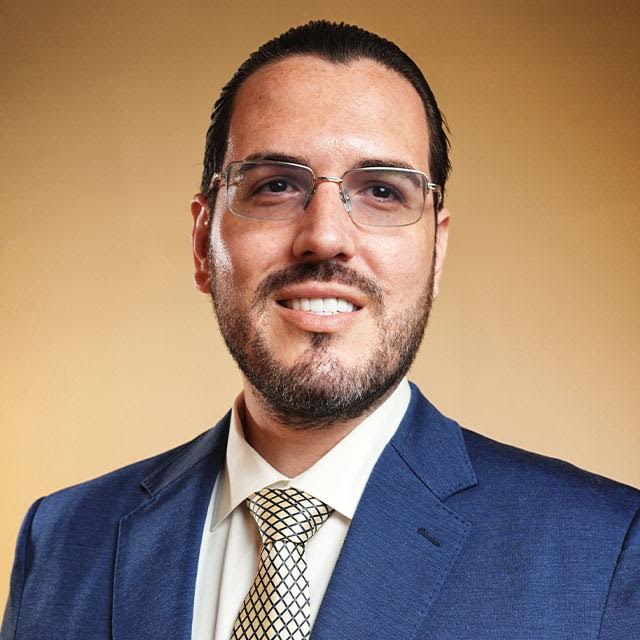
Over 20 years in New York estate planning, probate, and elder law. 5,000+ families guided through complex legal matters.
Planning for a Blended Family? Let's Get It Right.
Second marriages require a complete estate plan rebuild — not just an update. We'll help you protect your spouse, your children, and the legacy you've built.
Schedule a Free Consultation Or call us: (212) 561-4299