What Is a Supplemental Needs Trust in New York?
I've sat across from hundreds of parents in my office at 15 Maiden Lane who all share the same quiet fear: "If I leave money to my son, does he lose Medicaid?" It's the right question. And a Supplemental Needs Trust — drafted correctly — is almost always the right answer.
The Problem a Supplemental Needs Trust Solves
Here's the reality in New York: Medicaid and Supplemental Security Income (SSI) are means-tested programs. Medicaid cuts off if your countable assets exceed $15,950 (2026 limit for most community Medicaid programs). SSI cuts off if you hold more than $2,000. A $25,000 inheritance — even from a loving grandparent — can wipe out both benefits overnight.
That's not a hypothetical. I've seen it happen to a family in the Bronx whose grandmother left $40,000 directly to her 34-year-old grandson with cerebral palsy. He lost Medicaid for 18 months. His home attendant services stopped. His mother had to quit her job to care for him. The whole family unraveled financially — over an inheritance that was meant to help.
A Supplemental Needs Trust (SNT) — called a "supplemental needs trust" under New York Estates, Powers and Trusts Law (EPTL) § 7-1.12 — prevents that outcome. The trust owns the assets. The beneficiary doesn't. Because the assets aren't in the beneficiary's name and the beneficiary can't demand a distribution on their own, the government treats the trust funds as unavailable for eligibility purposes. Benefits stay intact.
The Special Needs Trust practice page on our site has more on the legal framework. But let me walk you through the key decisions you'll actually face.
First-Party vs. Third-Party: The Choice That Changes Everything
Not all Supplemental Needs Trusts are created equal. The single most important question is: whose money is going into the trust?
First-Party SNTs (Also Called d4A Trusts)
A first-party SNT holds the disabled person's own money. Think of a 29-year-old woman from Queens who receives a $300,000 personal injury settlement after a car accident leaves her with a traumatic brain injury. That money is legally hers. If she deposits it in her own bank account, she immediately loses Medicaid. But if the funds go into a properly structured first-party SNT under 42 U.S.C. § 1396p(d)(4)(A), Medicaid stays in place.
The rules are strict. The beneficiary must be under age 65 when the trust is created. The trust must be established by a parent, grandparent, legal guardian, or a court — the disabled person generally cannot create their own first-party trust in New York (though legislation has evolved on this). And here's the trade-off you cannot avoid:
Medicaid Payback Requirement: Every dollar New York Medicaid spends on the beneficiary during their lifetime becomes a debt owed by the trust after death. Before any money passes to heirs, the state gets paid back — dollar for dollar. This is non-negotiable in a first-party SNT. It's the price of preserving Medicaid on funds the beneficiary already owned.
First-party trusts are not bad planning tools. They're often the only option when someone receives an inheritance or settlement directly. But they require careful management because every dollar spent today reduces what's left to reimburse the state later — and any money not spent on the beneficiary during their life goes straight to Medicaid, not to the family.
Third-Party SNTs: The Better Option for Proactive Planning
A third-party SNT holds money that never belonged to the beneficiary — typically assets coming from parents, grandparents, aunts, uncles, or siblings. Because the disabled person never owned the funds, there's no Medicaid payback. When the beneficiary dies, whatever remains in the trust passes to whoever the family designates: siblings, a charity, a school, anyone.
This is the vehicle I recommend to virtually every parent who walks into my office with a child who has a disability. Set up a standalone third-party SNT now. Redirect your will, your life insurance, and your retirement account beneficiary designations to fund it. Done correctly, you protect your child's benefits for their entire life — and your other children still inherit whatever isn't spent.
Third-party SNTs can be standalone trusts created and funded during your lifetime, or they can sit inside your will as a testamentary trust (created only after you die). For most families, a standalone trust makes sense because it can receive gifts from multiple family members during your lifetime, not just at death.
| Feature | First-Party SNT | Third-Party SNT |
|---|---|---|
| Whose money? | Beneficiary's own assets | Family or third-party assets |
| Medicaid payback on death? | Yes — mandatory | No |
| Age limit to create? | Under 65 | None |
| Who can establish? | Parent, grandparent, guardian, or court | Any third party |
| Remainder beneficiaries? | After Medicaid payback only | Freely designated |
| Best used for? | Personal injury settlements, direct inheritances | Family estate planning, gifts |
What Can the Trust Actually Pay For?
This is where families get confused. The SNT exists to supplement government benefits — not to replace them. Medicaid covers medical care. SSI covers basic living expenses. The trust covers everything else that enhances your loved one's quality of life.
Over 20+ years, I've helped trustees make distributions for all of the following — and none of them triggered a benefit reduction:
- A laptop and adaptive software for a young man in Staten Island taking online college courses
- Concert tickets, Broadway shows, and gym memberships for a 40-year-old woman in Brooklyn with Down syndrome
- Private occupational therapy sessions beyond what Medicaid covers for a child on the autism spectrum in the Bronx
- A service dog and veterinary care for a veteran with PTSD in Queens
- Dental work that Medicaid wouldn't cover — teeth cleaning, orthodontics, cosmetic procedures
- A vacation for the beneficiary and a caregiver to Florida
- Clothing, furniture, and household items
- Legal fees and financial management services
What the trust generally should not pay for directly: cash to the beneficiary, food, or shelter expenses. The Social Security Administration calls these categories "in-kind support and maintenance." If the trust pays rent or grocery bills, it can reduce the SSI payment by up to one-third of the federal benefit rate (about $314/month in 2026) plus a $20 disregard. That's not always a dealbreaker — sometimes paying for shelter from the trust still makes sense — but the trustee needs to run the numbers first.
Practical Rule: Never write a check directly to the beneficiary. Pay vendors directly. Buy the laptop yourself and give the beneficiary the receipt. Pay the gym membership directly to the gym. Direct cash hands the problem right back to the beneficiary — and the SSA counts it as unearned income.
ABLE Accounts: A Useful Tool That Doesn't Replace the SNT
New York participates in the federal ABLE Act program through NY ABLE, which allows people with disabilities (onset before age 26, though this limit changes in 2026 under recent legislation) to hold a tax-advantaged savings account without losing SSI or Medicaid eligibility — up to $100,000 in the account without affecting SSI.
ABLE accounts are genuinely useful. The beneficiary can manage the account themselves. Contributions grow tax-free. Distributions for "qualified disability expenses" — a broad category that includes education, housing, transportation, employment training, and more — come out tax-free. The annual contribution limit is $18,000 in 2026 (plus an additional amount for working beneficiaries).
But an ABLE account isn't a substitute for a well-drafted SNT. Here's why:
- The $100,000 SSI exemption cap is a hard limit. Anything above it counts against the $2,000 SSI resource limit.
- ABLE accounts are subject to Medicaid payback on death — just like first-party SNTs.
- Contribution limits restrict how quickly you can fund an ABLE account (maximum ~$18,000/year from all sources).
- A large settlement or inheritance cannot be deposited into an ABLE account all at once.
The smart approach for most families: use both. Fund the SNT for long-term asset protection and larger amounts. Use the ABLE account for day-to-day flexibility — the beneficiary can carry a debit card linked to the ABLE account and spend freely on qualifying expenses without needing trustee approval for every coffee or bus ride.
Our elder law and Medicaid planning team can help coordinate ABLE accounts with broader trust and benefit planning.
Pooled Trusts: An Option Worth Knowing About
Not every family needs a standalone SNT. For smaller amounts — say, a $15,000 inheritance or modest annual gifts — the administrative cost of a standalone trust may not be justified. That's where pooled trusts come in.
A pooled supplemental needs trust, authorized under 42 U.S.C. § 1396p(d)(4)(C), is administered by a nonprofit organization. Multiple beneficiaries' accounts are pooled together for investment purposes, but each beneficiary has a separate sub-account. The nonprofit handles all trustee duties — record-keeping, distributions, Medicaid compliance, annual accountings — for a management fee.
New York has several approved pooled trust organizations, including NYSARC Trust Services and The Jewish Guild for the Blind. Pooled trusts accept both first-party and third-party funds. They can be created quickly — sometimes within days — which makes them valuable when someone needs to qualify for Medicaid immediately and has excess assets to shelter.
One important distinction: pooled trust accounts funded with the beneficiary's own money (first-party) are still subject to Medicaid payback. Third-party funds contributed to a pooled trust, however, are not — the nonprofit retains the remainder upon the beneficiary's death, which is what permits the third-party payback exemption.
For families doing long-term planning with larger assets, a standalone third-party SNT with a trusted individual or professional trustee is usually the better fit. For rapid Medicaid eligibility planning or smaller trusts, a pooled trust may be the right call. An experienced attorney can help you compare the options against your specific facts.
The Trustee Question: Who Actually Runs This Thing?
The trustee is the person or institution that holds legal title to the trust assets and makes all distribution decisions. This role is not ceremonial. A bad trustee choice can be just as damaging as a bad trust document.
I've seen siblings who genuinely love their disabled brother still make bad trustee decisions — not out of bad faith, but because they didn't understand the SSI rules on in-kind support, didn't file annual accountings, or made cash distributions that triggered an overpayment demand from the Social Security Administration. One family in the Bronx owed the SSA $34,000 after four years of improperly structured distributions.
The trustee must be able to:
- Track distributions and maintain records that satisfy Medicaid and SSA audit requirements
- Understand which expenses are permissible and which create benefit complications
- Invest trust assets prudently under the New York Prudent Investor Act
- File annual accounts (or obtain a proper waiver under SCPA procedures)
- Respond to Medicaid's estate recovery unit after the beneficiary's death
For most families, the best answer is a co-trustee structure: a family member who knows the beneficiary personally, paired with a professional trustee or attorney who handles compliance. You can also name a trust protector — a third party with power to remove and replace the trustee if circumstances change — which provides an important safety valve.
Building the SNT Into Your Broader Estate Plan
A Supplemental Needs Trust doesn't exist in a vacuum. It has to connect to everything else in your estate plan. That means reviewing:
- Your will: Any bequest that would pass directly to a disabled beneficiary needs to be redirected to the SNT. A standard "equal shares to all my children" clause will destroy your child's benefits if one of those children has a disability.
- Life insurance: Beneficiary designations on life insurance pass outside your will. Name the SNT as beneficiary for the disabled child's share — not the child directly.
- Retirement accounts: IRAs and 401(k)s also pass by beneficiary designation. Naming a trust as beneficiary of a retirement account requires specific language to satisfy the SECURE Act's 10-year distribution rule for inherited IRAs.
- Joint accounts: If a disabled person is a joint owner of a bank account, those funds may count toward their resource limit even if they don't control the account. Restructure as needed.
- Gifts from extended family: Make sure grandparents, aunts, and uncles know about the trust. A well-meaning $10,000 Christmas gift given directly to a beneficiary can trigger disqualification.
For a broader look at how SNTs fit into a complete estate strategy, our estate planning practice page covers the full picture. And if you're concerned about long-term care costs for aging parents alongside disability planning for a child, our elder law services address both at once.
What Happens if You Get It Wrong?
Poorly drafted SNTs are a real problem. I review trust documents from other firms several times a year where the language doesn't meet current Medicaid standards, the payback clause is missing or improperly worded, or the trustee power provisions are too broad — creating what's called a "general support trust" rather than a true supplemental needs trust. A general support trust — one where the trustee is required, not merely permitted, to provide for the beneficiary's support — can cause a Medicaid disqualification even if the trust was set up with the best intentions.
Online templates are particularly dangerous here. I've seen templates that copy federal statutory language but omit required New York-specific provisions. The New York State Department of Health has specific requirements for Medicaid-exempt trusts that go beyond federal minimums. An SNT that works in New Jersey may fail in New York.
If you have an existing SNT that was drafted more than five years ago or by an attorney without specific special needs planning experience, it's worth having a current review. Laws change. Medicaid rules change. Trust language that was adequate in 2018 may not protect your loved one in 2026.
Our wills and trusts team can review existing documents and identify whether amendments are needed. And our probate and estate administration team handles situations where an SNT must be created after a family member dies and a direct inheritance has already passed to a disabled person.
A Real Example: The Garcia Family in Jackson Heights
Eduardo Garcia's parents came to my office in 2019. Their 22-year-old son Miguel had autism and lived in a supervised residence in Queens. He received SSI and Medicaid. Eduardo's parents owned a home in Jackson Heights worth roughly $680,000 and had $290,000 in retirement savings. They were terrified that if they died, a portion of those assets would inadvertently destroy Miguel's benefits.
We set up a third-party SNT for Miguel's benefit. Their wills were updated to fund the trust with Miguel's share of the estate. Life insurance policies naming Miguel directly were rewritten to name the SNT. We coordinated with the retirement account custodian to name the SNT as the designated beneficiary for Miguel's share, with specific conduit trust language satisfying SECURE Act requirements.
Eduardo's father died in 2023. The estate plan worked exactly as designed. Roughly $380,000 flowed into Miguel's SNT. His SSI continues. His Medicaid continues. His placement in the Queens residence is secure. His siblings received their shares outright. Nothing went to Medicaid recovery because it was a third-party trust.
That's what proper planning looks like.
How We Can Help
At Morgan Legal Group, P.C., our team has spent 20+ years helping New York families create Supplemental Needs Trusts that actually work — documents that meet current federal and state Medicaid standards, integrate with your full estate plan, and hold up when the family needs them most. We've guided 5,000+ families through complex planning situations across all five boroughs.
We also work with families who need emergency Medicaid planning — where a loved one is entering a nursing home or long-term care facility and needs a trust established quickly. In those situations, a pooled trust combined with Medicaid planning strategy can protect significant assets even on short timelines.
For additional perspective on how New York courts and Medicaid agencies review these trusts, we recommend reading the resources at Morgan Legal NY's Special Needs Trust resource page.
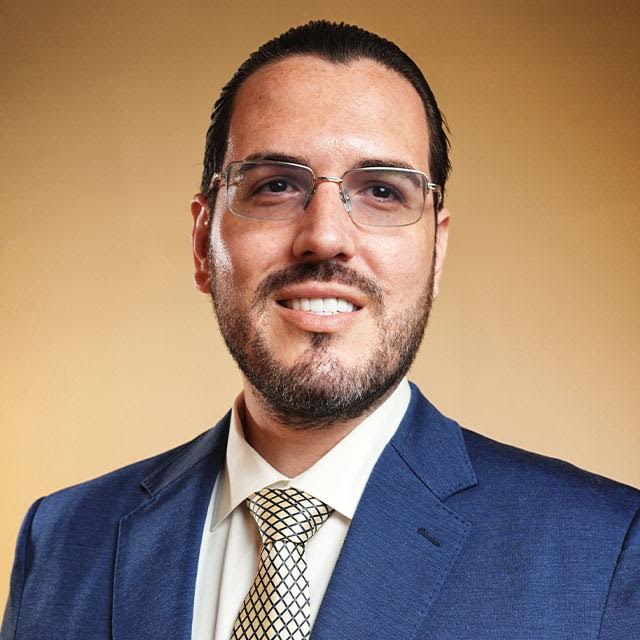
Over 20 years in New York estate planning, probate, and elder law. 5,000+ families guided through complex legal matters.
Protect Your Loved One's Benefits for Life
A properly drafted Supplemental Needs Trust preserves Medicaid and SSI while giving your family member the resources to live fully. Let's build one that works.
Schedule a Free Consultation Or call us: (212) 561-4299